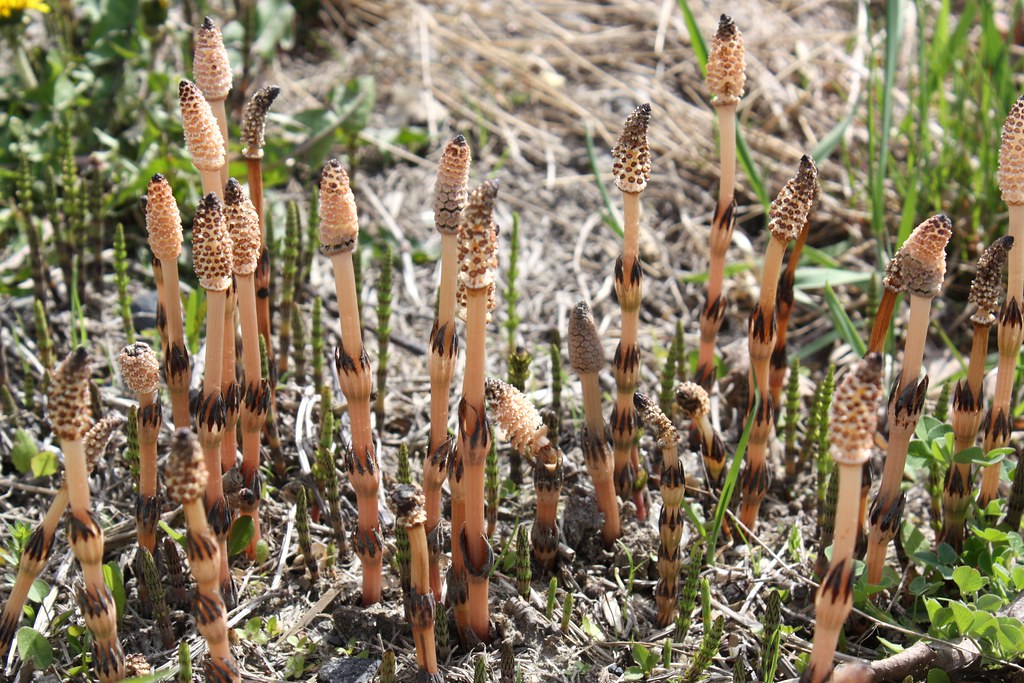
 Equisetum arvense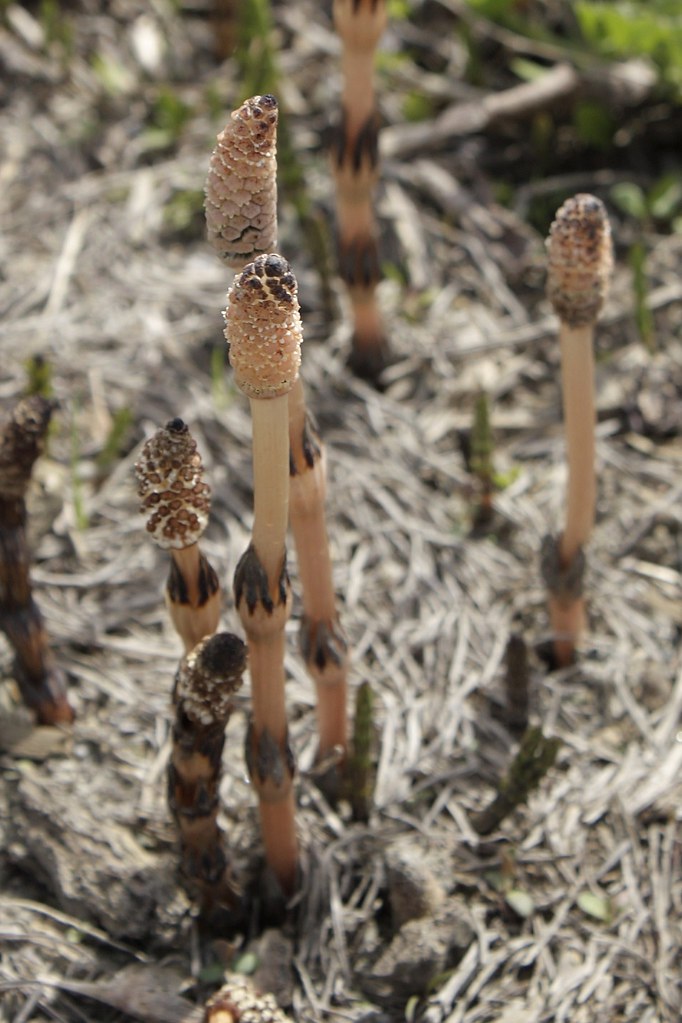
Technorati Tags: Equisetum arvense Field Horsetail scouring rush
Del.icio.us Tags: Equisetum arvense Field Horsetail scouring rush
Flickr Tags: Equisetum arvense Field Horsetail scouring rush

_/\_/\_
Equisetum arvense

 Our foremothers used this to scrub their pots and pans, giving field horsetail this name. In this photograph, taken behind my garage on Saturday, you see the brown fertile stem and the green sterile stem. In an earlier post I identified the green sterile stem as ground pine. I first saw these stems growing behind the garage when the guys were replacing my well pump. They put the old pump and pressure tank in my junk pile there. That is when I had my first inkling that my ground pine was horsetail because I knew that horsetail came in two versions.
 Genus Lycopodium

