Thursday, December 31, 2009

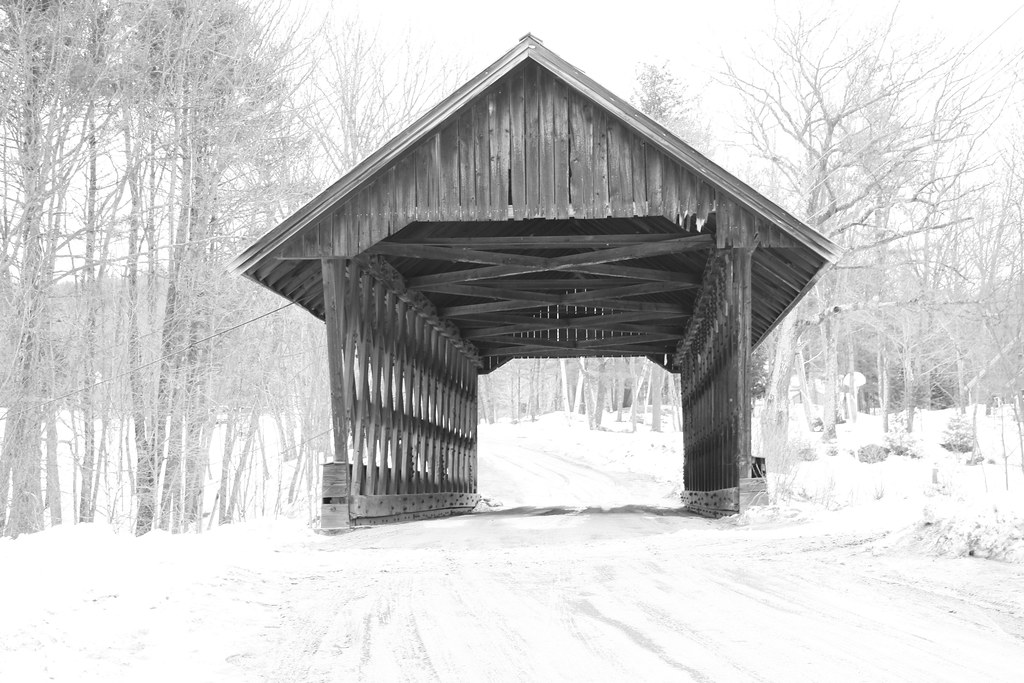
Corbin Covered Bridge #17

source: New Hampshire Covered Bridges:

Location:
West of N.H. Route 10 on North Newport Road, two miles north of Newport Village over the Croydon Branch of the Sugar River.
Style of Bridge: Town lattice truss
Year of Construction: Approximately 1845
Original Cost: Unknown
Structural Characteristics:
The bridge is 96'2" long with a clear span of 80'0". It has an overall width of 17'11" with a roadway width of 14'3", and a maximum vertical clearance of 12'3". It is fully sheathed. The structure is posted for six tons.
Maintained By: Town of Newport
World Guide Number: 29-10-05
New Hampshire Number: 17
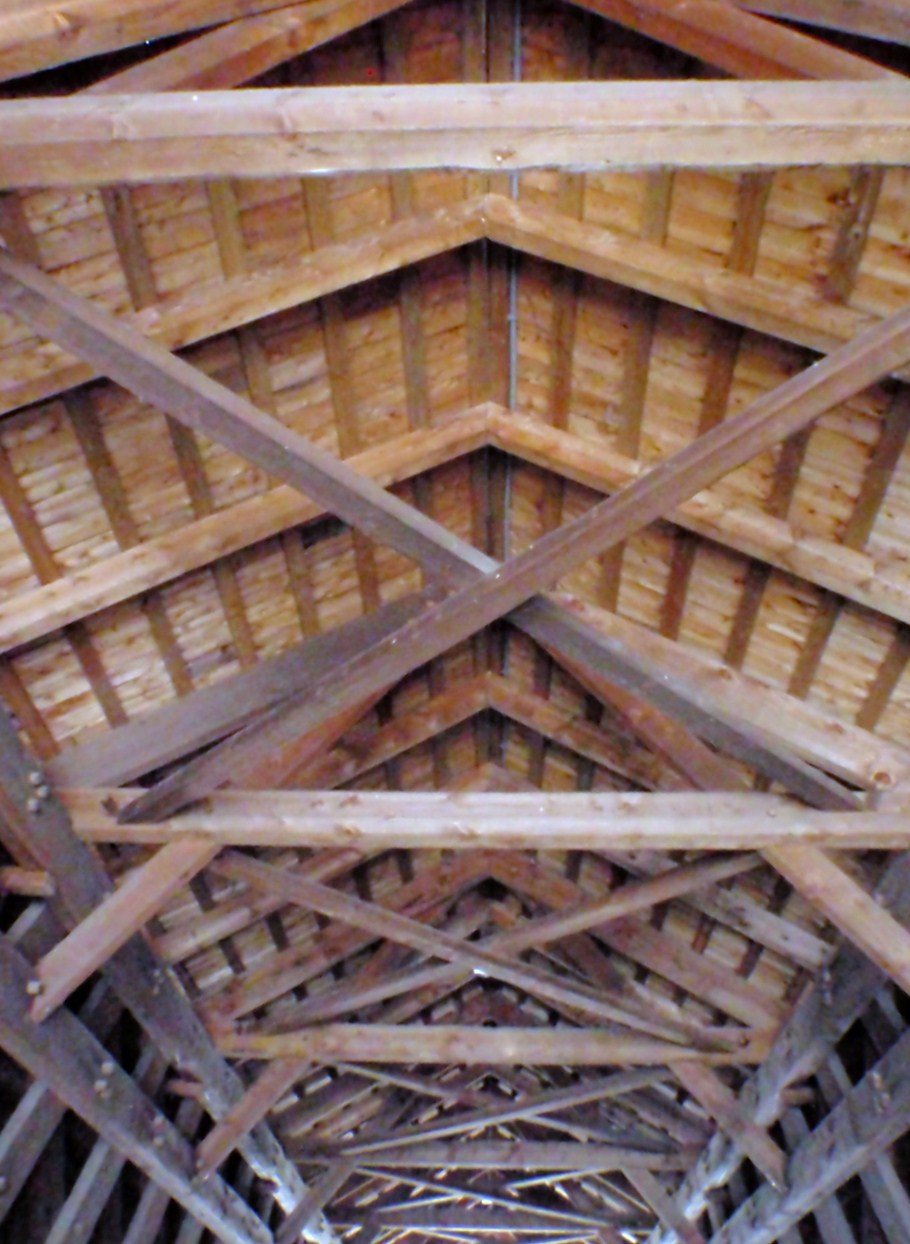
Historical Remarks:
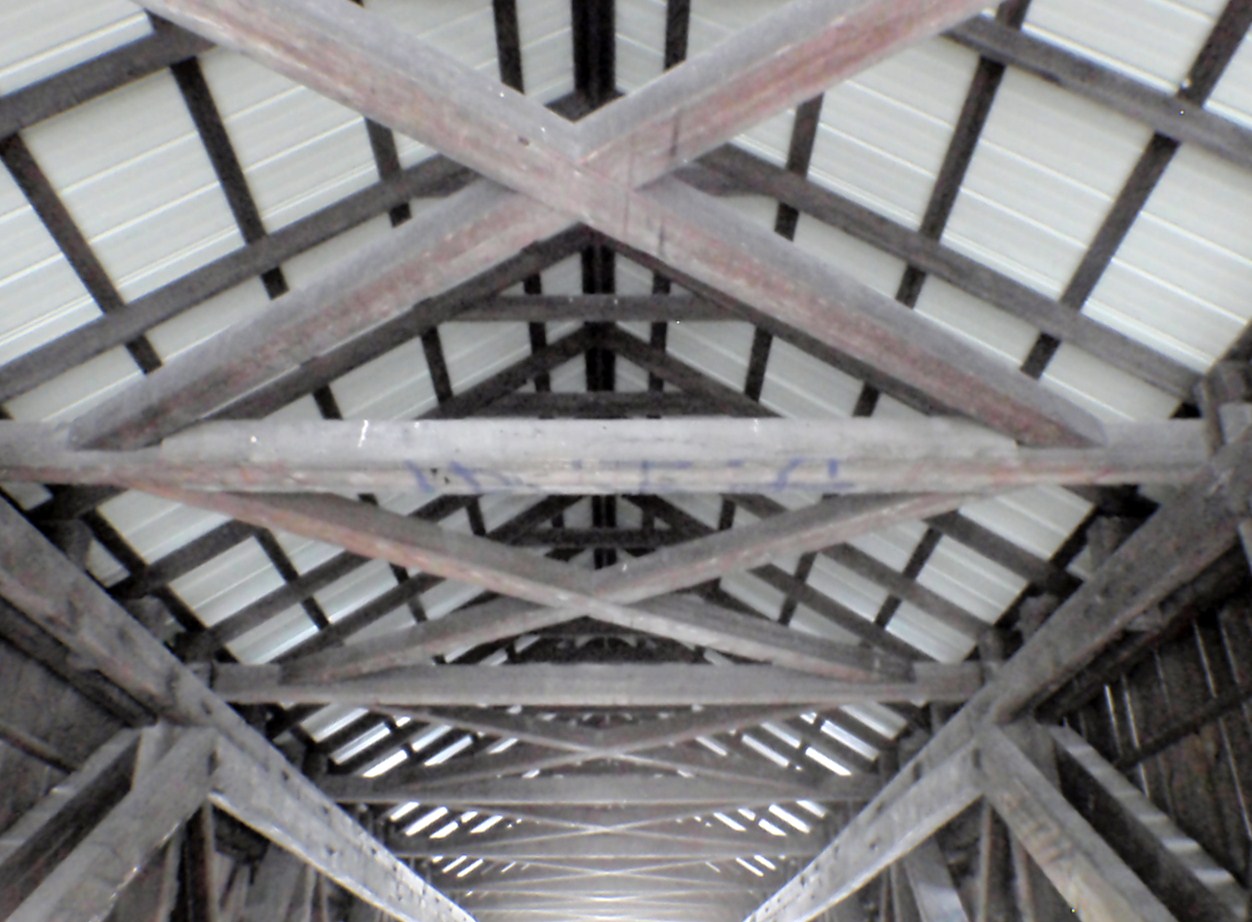
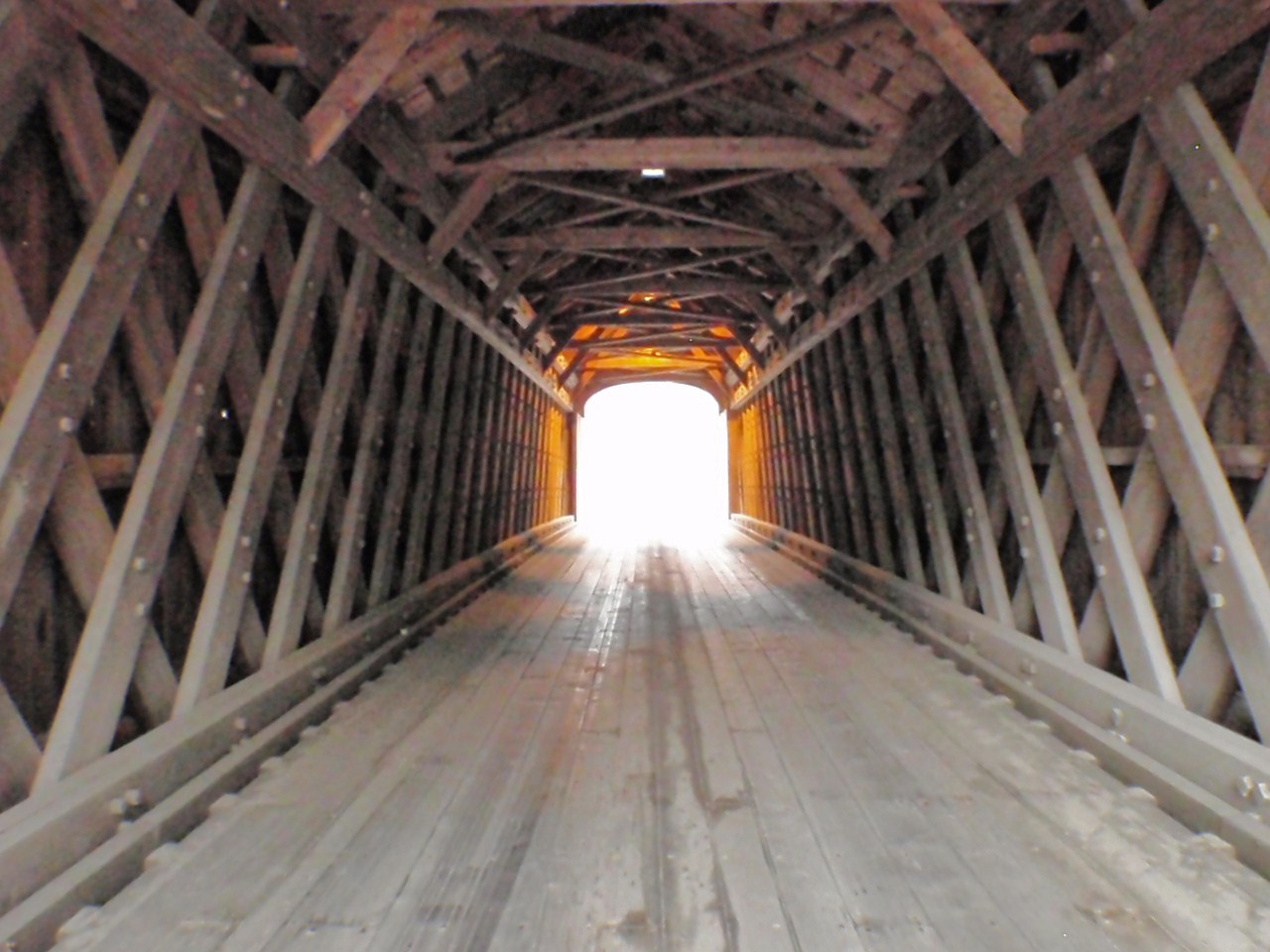
The state suggested closing the bridge in May 1979, but the town reduced the posted weight limit from six to three tons. It was rehabilitated by the state in 1980 at a cost of $43,000. The project was funded, in part, with a federal Historic Preservation Fund matching grant from the National Park Service of the U.S. Department of the Interior through the New Hampshire Division of Historical Resources. The bridge was then reposted for a six ton limit. The Corbin Bridge was listed on the National Register of Historic Places. On May 24, 1993, the Corbin Bridge was destroyed by fire. At the time of the publication, the town of Newport expressed the intention to replace the structure with another covered bridge.

Technorati Tags: Del.icio.us Tags: Flickr Tags:

diigo it

_/\_/\_
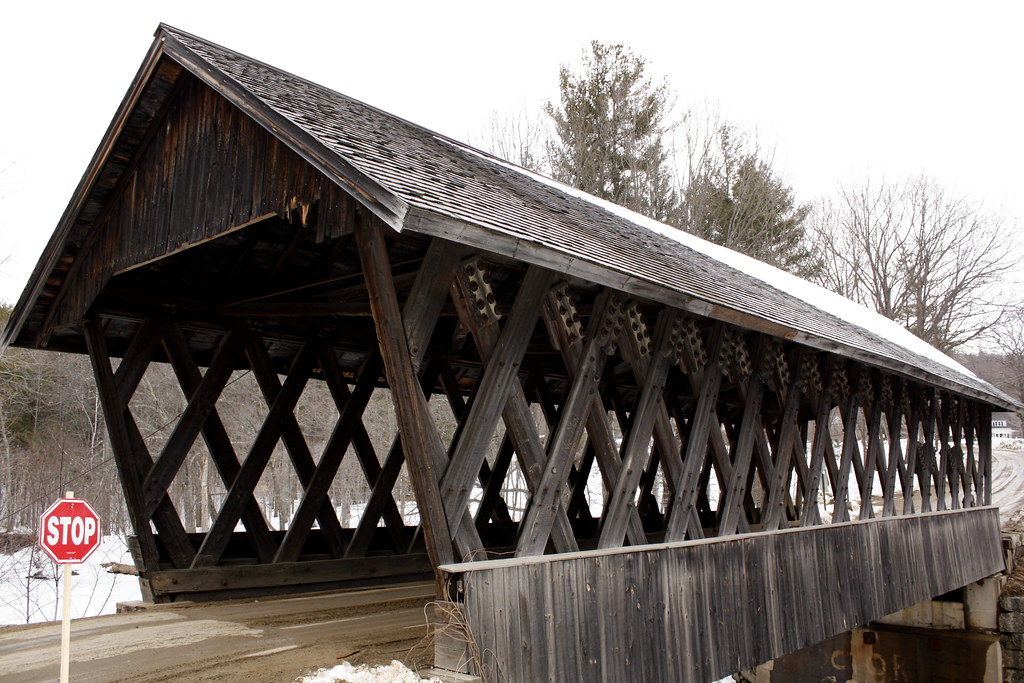
Keniston Covered Bridge #15


Location: South of U.S. Route 4, one mile west of Andover Village on Lorden Road over the Blackwater River in Andover.
Style of Bridge: Town lattice truss
Year of Construction: 1882
Original Cost: $745.57
Structural Characteristics: The bridge is 64'6" long with a clear span of 54'2". It has an overall width of 18'9" with a roadway width of 15'10" and a maximum vertical clearance of 12'0". It is partially sheathed on the sides and has a deep overhang reminiscent of the rakish prow of a ship. The bridge is posted for six tons.
Maintained By: Town of Andover
World Guide Number: 29-02-02
New Hampshire Number: 15

Historical Remarks:
The structure of the bridge was built by Albert R. Hamilton. The bridge's name, Keniston, came from a prominent family of that name who lived for many years in one of the old homesteads in town. The bridge has been damaged only once, in 1972, when ice tore off several planks. The bridge was rehabilitated by the town in 1981 at a cost of $80,000. During the rehabilitation process, the bridge was lifted by two cranes and moved to a temporary site only a few feet above the water level. The engineers had to work quickly to make sure the abutment repairs were completed and the bridge relocatd to its proper location before heavy rains and rising waters could carry it away. The Keniston Bridge is listed on the National Register of Historic Places.

And as Wingnut and I saw it on the Rail Trail last summer on our bike ride:


Technorati Tags: Del.icio.us Tags: Flickr Tags:

diigo it

_/\_/\_

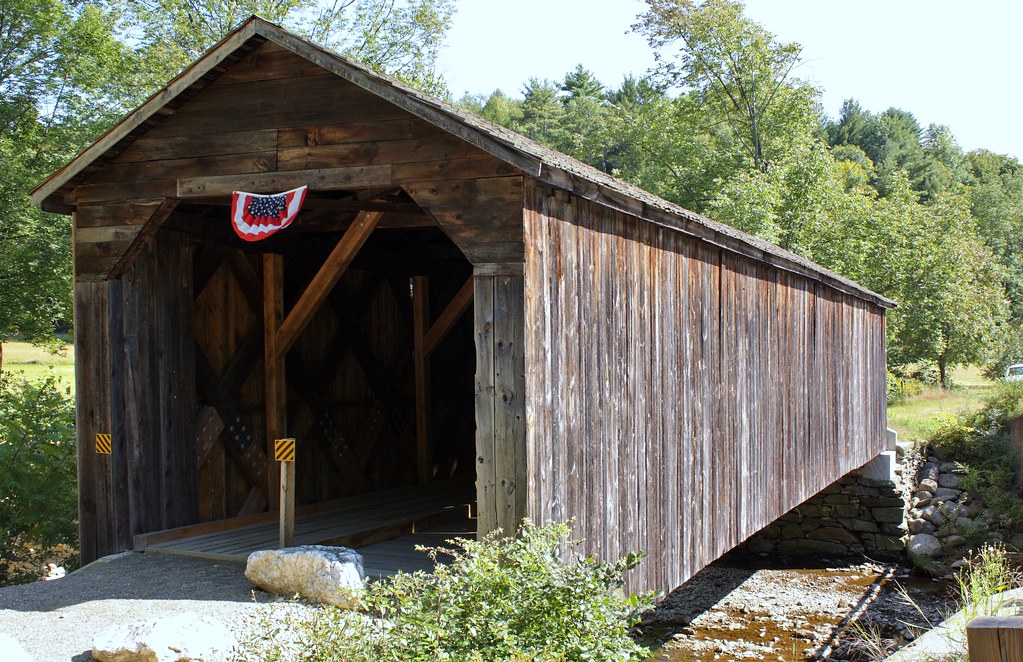
McDermott Covered Bridge #18

source: New Hampshire Covered Bridges

Location: North of N.H. Route 123A, two miles north of Alstead Village in Langdon.
Style of Bridge: Town lattice truss with light arches
Year of Construction: 1869
Original Cost: $450
Structural Characteristics: The bridge is 81'0" long with a clear span of 76'0". It has an overall width of 16'6" with a roadway width of 12'1" and a maximum vertical clearance of 11'1". It is braced by cables attached to the new highway bridge which bypassed it in 1964. It is now used for foot traffic only.
Maintained By: Town of Langdon
World Guide Number: 29-10-06
New Hampshire Number: 18

Historical Remarks:
Three bridges previously stood on this site. They were built in 1790, 1814, and 1840 and were all of the pole and plank type. The current bridge, built in 1869, was of a type patented by Sanford Granger in 1833. The patent appears to be a modification of the Town lattice truss. Sandford Granger owned a sawmill on Fall Mountain Brook from 1838 until 1851. Virgin timber removed from the mountain was used in the construction of his bridges. The current structure was built by his son Albert S. Granger. In 1961, an estimate of $7,000 was given to the town for the restoration of the bridge. The town was to pay $2,100 and the state $4,900. However, the town decided to establish a sinking fund to pay for building a modern bridge which was built downstream in 1964 under the Town Bridge Aid Program. The covered bridge was closed to vehicular traffic and retained for historic reasons. The structure is also known as the Cold River Bridge. The McDermott Bridge is listed on the National Register of Historic Places.

In the October 2005 floods, this bridge was nearly destroyed. It was rebuilt and restored on a firmer foundation.

McDermott Covered Bridge (5)

Technorati Tags: Del.icio.us Tags: Flickr Tags:

diigo it

_/\_/\_

Wednesday, December 30, 2009

Pier Covered Bridge, #57


Location: East of Chandler Station and west of N.H. Route 103 on the Concord and Claremont Railroad line in Newport spanning the Sugar River.
Style of Bridge: Double Town-Pratt lattice truss
Year of Construction: 1907
Original Cost: Unknown
Structural Characteristics: The bridge is 216'7" long with clear spans of 103'0" and 98'0" with a center pier. It has an overall width of 20'9" with a railbed width of 15'0", and a maximum vertical clearance of 21'1". This section of rail line has been abandoned.
Maintained By: New Hampshire Department of Resources and Economic Development
World Guide Number: 29-10-03
New Hampshire Number: 57

source: New Hampshire Covered Bridges

Historical Remarks:
The current bridge was built in 1907 by the Boston and Maine Railroad to replace a wood lattice bridge constructed in 1871-1872 by the Sugar River Railroad. The double Town/Pratt lattice trusses with laminated arches were long favored on the branch lines of the Boston & Maine Railroad, largely under the influence of engineer J.P. Snow. In 1900 at least one hundred of this type were in use on the Boston & Maine system. This bridge is also known as the Chandler Station Bridge. The Pier Bridge is listed on the National Register of Historic Places.


Technorati Tags: Del.icio.us Tags: Flickr Tags:

diigo it

_/\_/\_

Tuesday, December 29, 2009

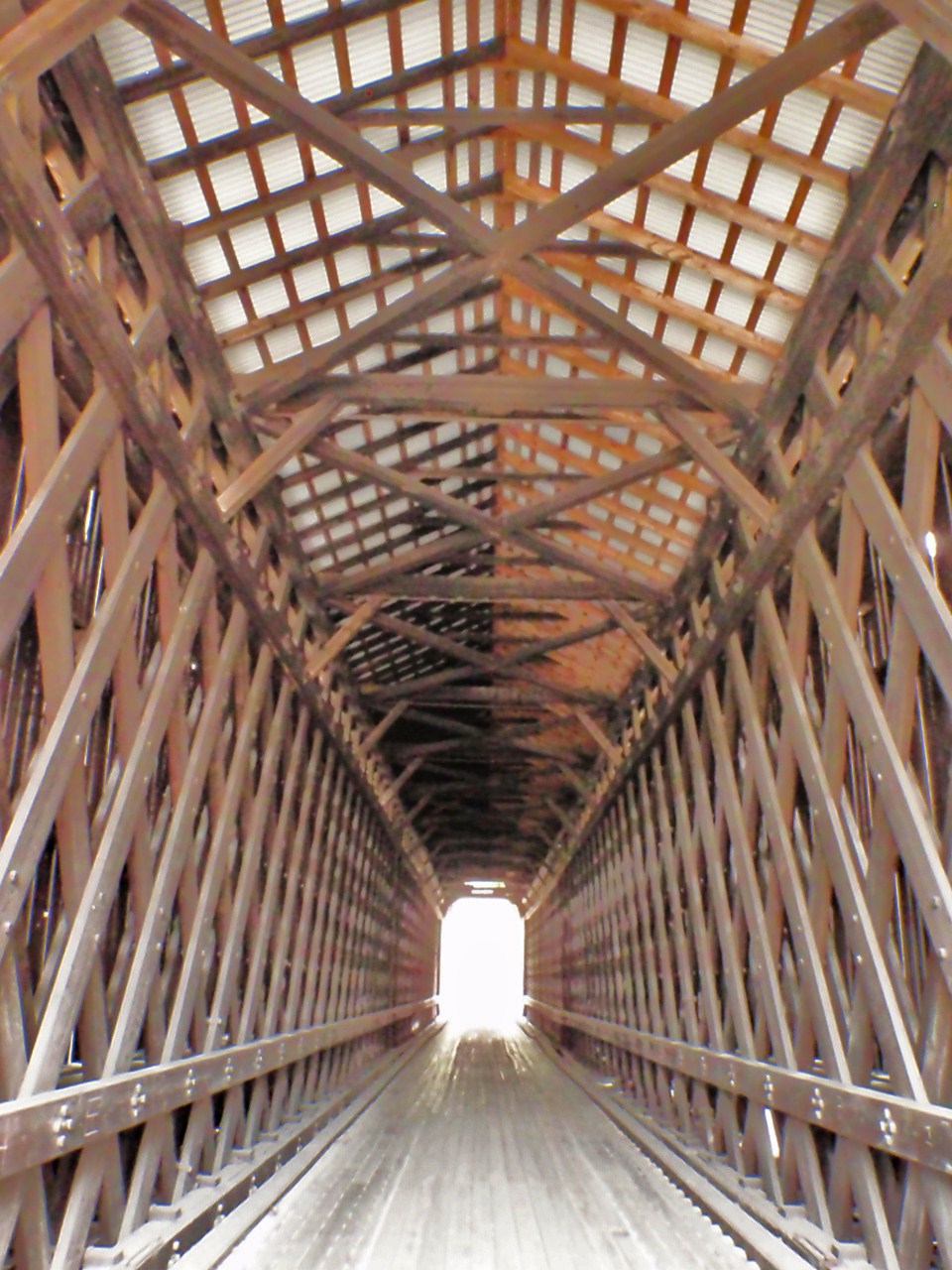
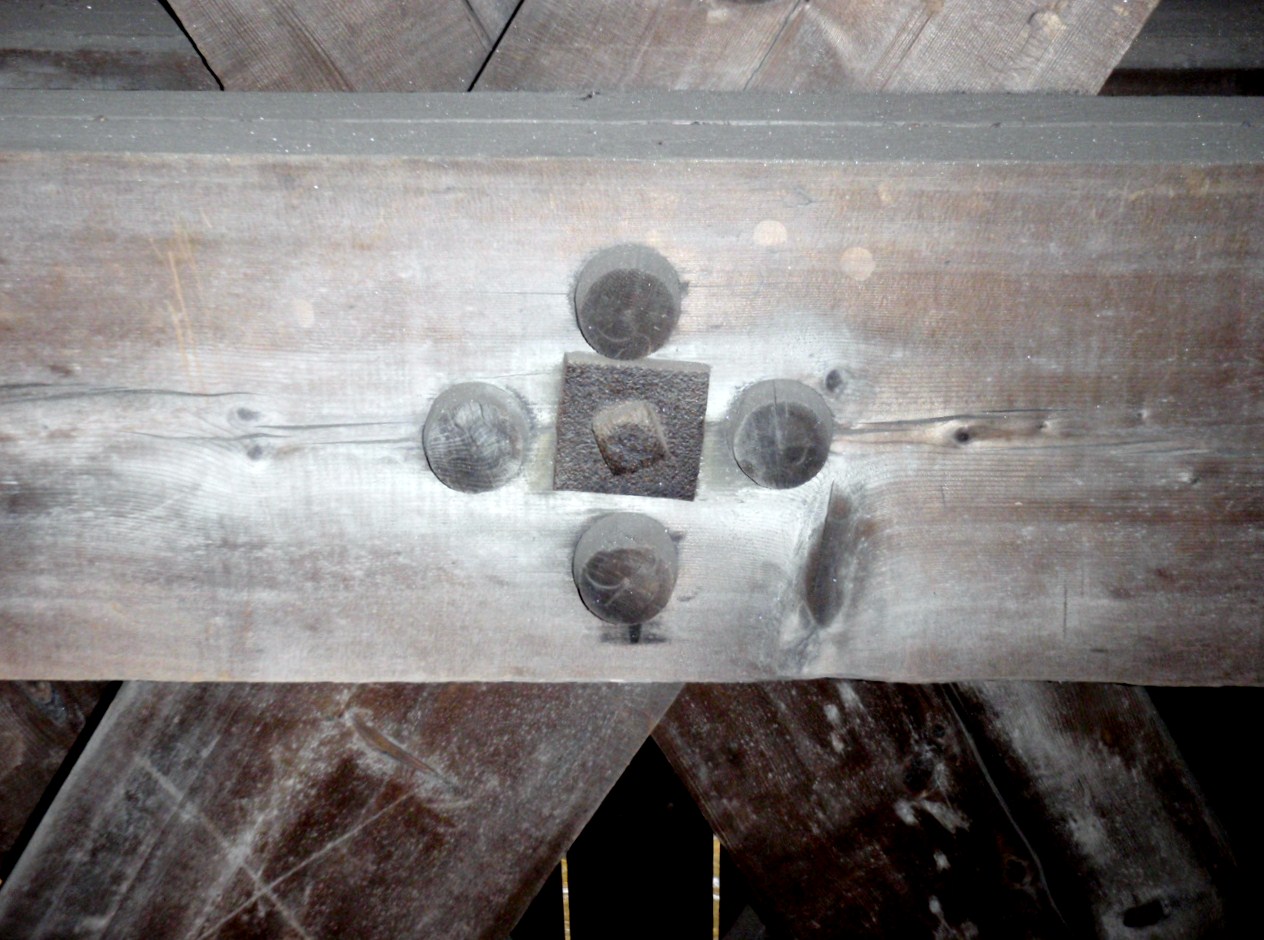
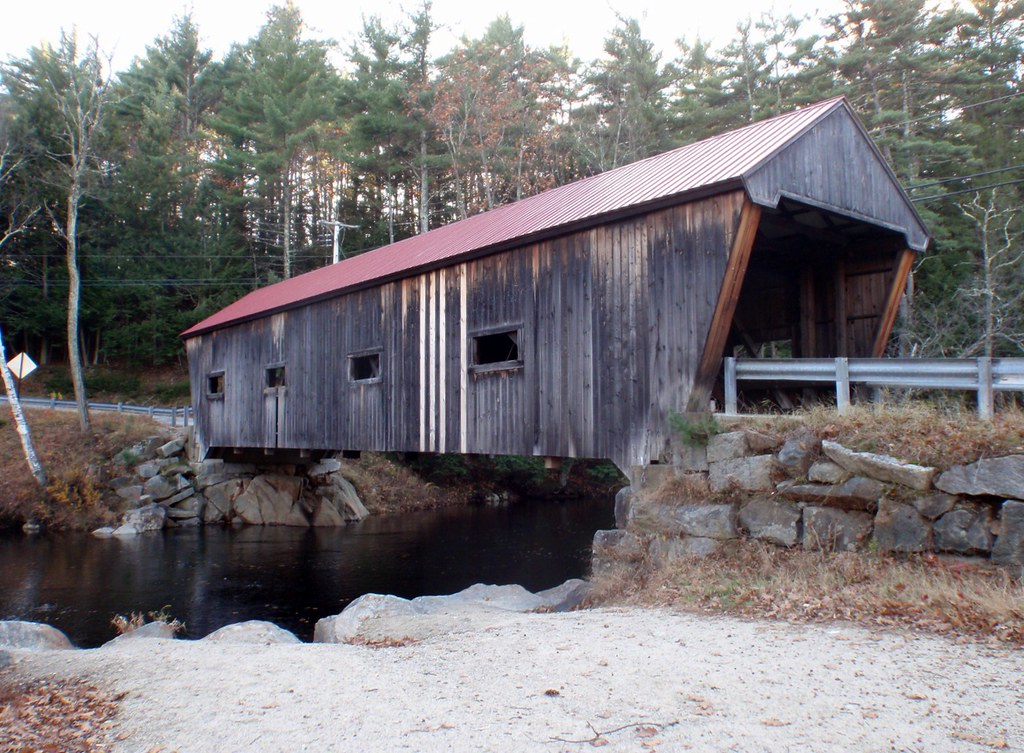
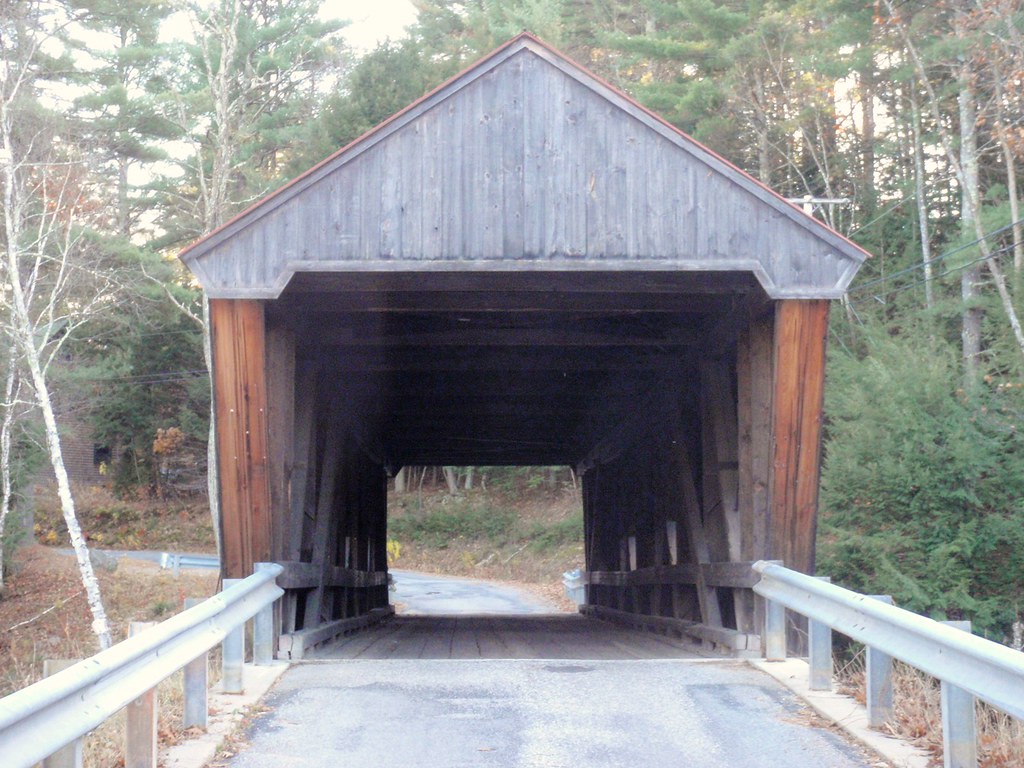
Dalton Covered Bridge (#12)

We finally sent my soggy Canon Rebel XSi to Canon for repairs. Once the cold weather set in in October, it simply would not work. I took these photographs with the new Olympus Tough 8000 that I had never bothered to learn how to use.

Dalton Bridge is in Warner, New Hampshire in the old village, and crosses the Warner River.

source: New Hampshire's Covered Bridges

Location: South of N.H. Route 103 on Joppa Road spanning the Warner river in Warner.

Style of Bridge: Long truss with an auxiliary Queenpost system

Year of Construction: Approximately 1853

Original Cost: $630.12

Structural Characteristics: The bridge is 76'6" long with a clear span of 70'10". It has an overall width of 17'3"; with a roadway width of 12'10", and a maximum vertical clearance of 10'10".
It is posted for six tons.

Maintained By:Town of Warner
World Guide Number: 29-07-05
New Hampshire Number: 12

Historical Remarks:
The structure was built by Joshua Sanborn. George Sawyer and Walter S. Davis built the abutments. Repairs were made to the bridge in 1871 at a cost of $134.81. In 1990, the state repaired the diagonal and the portal, and installed a new metal roof. There has been some debate as to the classification of the truss system. The Warner Historical Society in its 1974 publication, Warner N.H. 1880-1974, classified the bridge as a Haupt-type truss. the New Hampshire Department of Transportation indicates a classification of multiple Kingpost with an auxiliary Queenpost system. However, based on the National Register of Historic Places nomination form, it would appear to be classified as a Long truss with an auxiliary queenpost system. This is one of the oldest standing covered bridges in use today. It is also known as the Joppa Road Bridge. The bridge was rebuilt in 1963-1964. The rebuilding costs were shared by the town and the state. The Dalton Bridge is listed on the National Register of Historic Places.


Technorati Tags: Del.icio.us Tags: Flickr Tags:

diigo it

_/\_/\_

Yellow Crab Spider

I can usually only find these if I sit in a field and intently watch a small area of flowers. But John sees them as he walks through the field. That is how I was able to photograph this guy — John pointed him out to me. He was an active spider and was very difficult to photograph.

Technorati Tags: Del.icio.us Tags: Flickr Tags:

diigo it

_/\_/\_

Monday, December 28, 2009

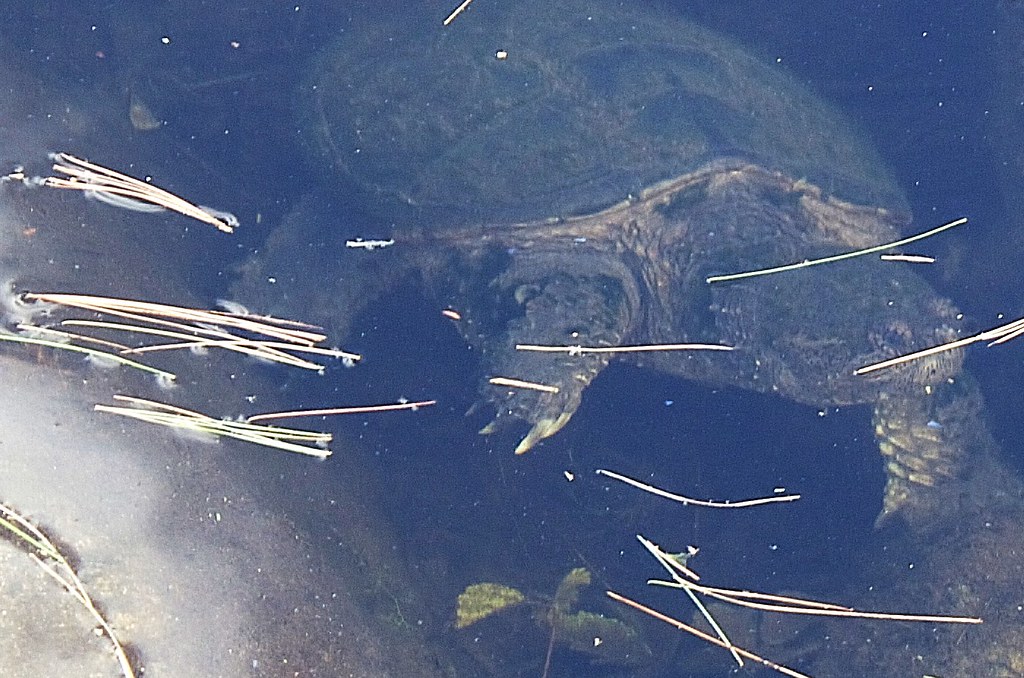
Lost Turtle Photos Found

Chelydra serpentina

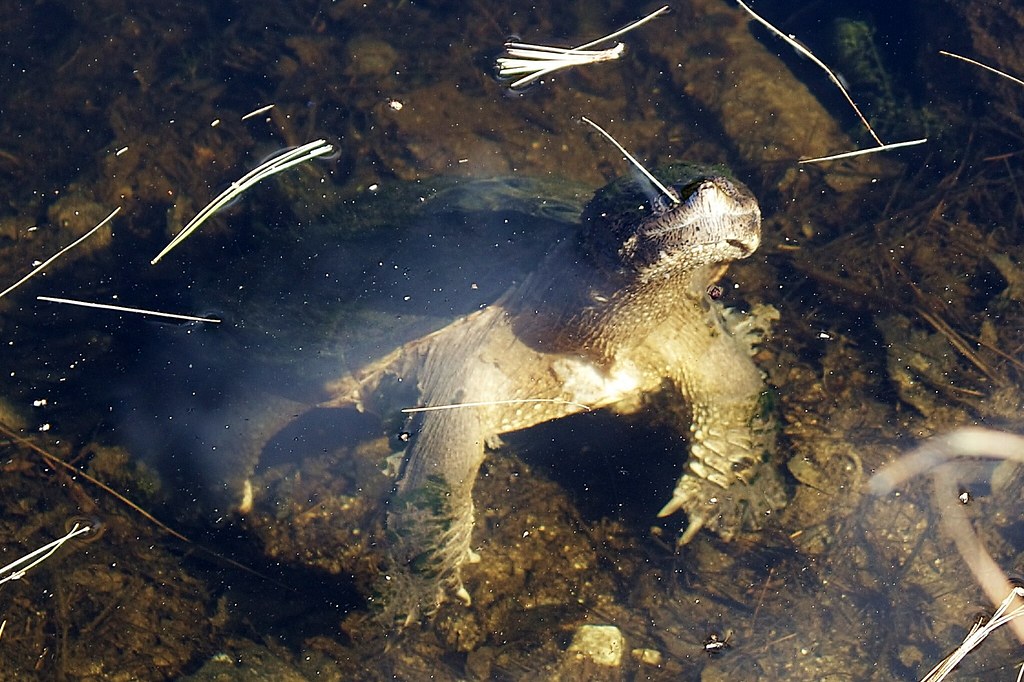
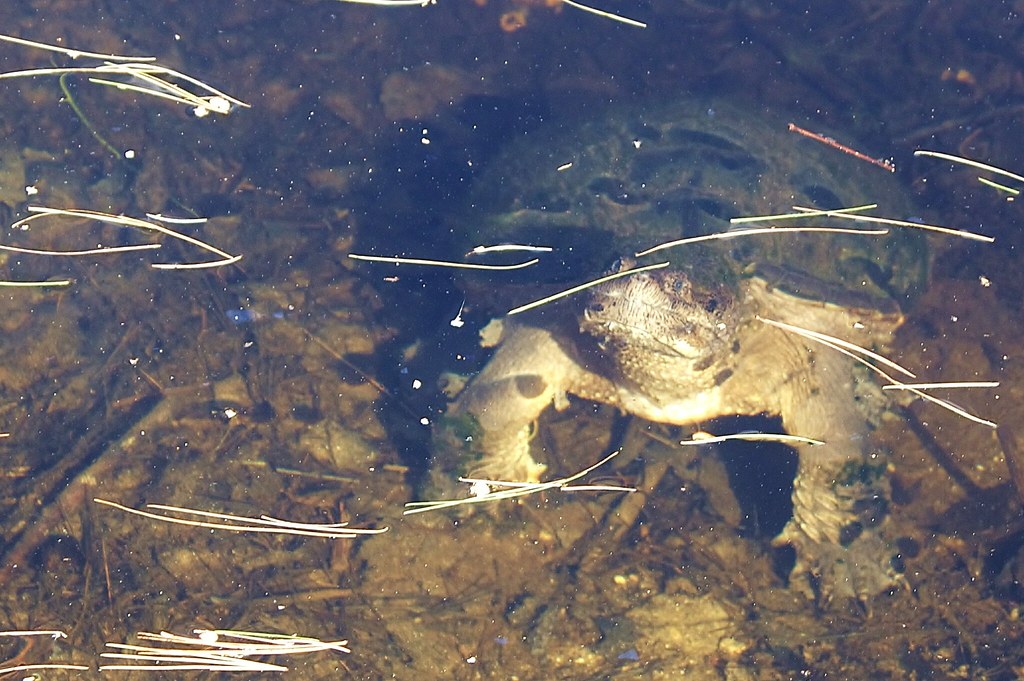
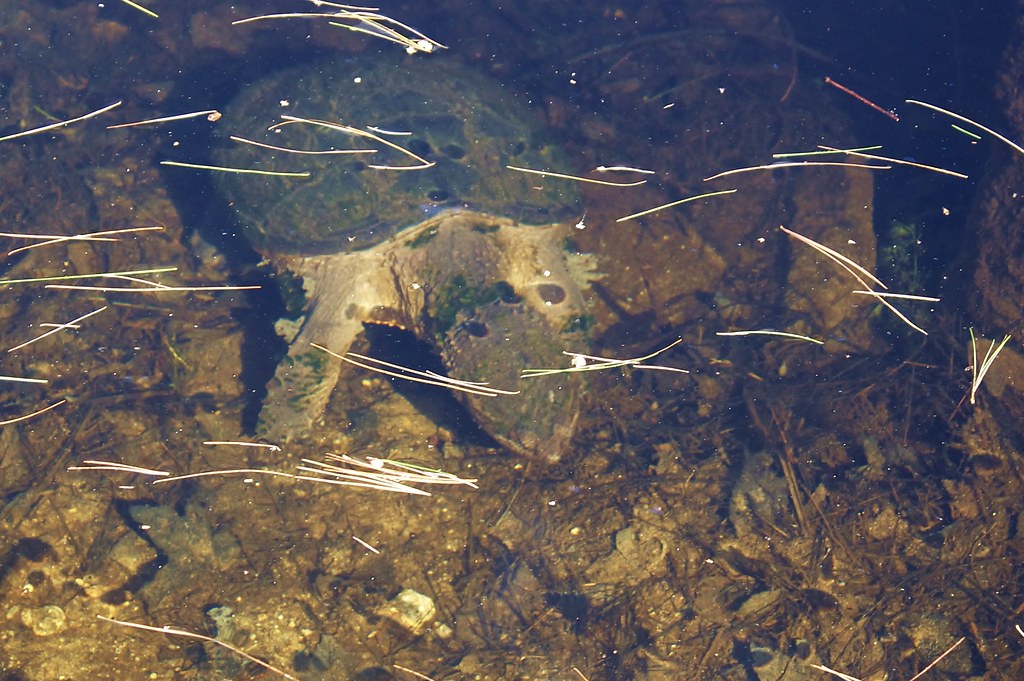
Our quest for snapping turtle photos and observations was rewarded last summer when Wingnut came home from Tannery Pond saying that there was a resident snapper just outside the swimming area. The kids were feeding it bait. I went down and tried to take photos. I did fairly well considering that I had never taken photos of a creature that was underwater before. And I did not use the polarizing filter that Amelia gave me (because I did not know how to use it until John taught me later in the summer). After downloading the photos to the computer that day, I never found them until tonight. I thought I had permanently lost them. It was quite a relief to find them! This was a small snapper. Next year? We'll try for one of the monster big ones!


NH Conservation Status: Not listed

State Rank Status: Widespread and secure.

Distribution: Throughout state, less common in northern New Hampshire.

Description:A large turtle measuring 8-14 inches and weighing up to 70 pounds. A rough carapace ranges in color form black to light brown. The head is large and the tail is long with a distinct saw-toothed edge.

Commonly Confused Species: Juveniles may be confused with musk turtles and wood turtles.

Habitat: Any permanent water body such as lakes, ponds, swamps, bogs, streams, and rivers, especially aquatic habitats with muddy bottoms and abundant submerged logs and aquatic vegetation. Use terrestrial habitats while searching for appropriate nesting sites and traveling among wetland habitats.

Life History: Lays 20-40 eggs in soil banks or sand and gravel piles in fields or lawns and may be several hundred feet or more from water. Hibernates in mud bottom or under logs or other submerged debris, sometimes communally.

Conservation Threats: Water pollution, road mortality, habitat loss.

source: http://www.wildlife.state.nh.us/Wildlife/Nongame/turtles/snapping_turtle.htm


Technorati Tags: Del.icio.us Tags: Flickr Tags:

diigo it

_/\_/\_

Tuesday, December 8, 2009

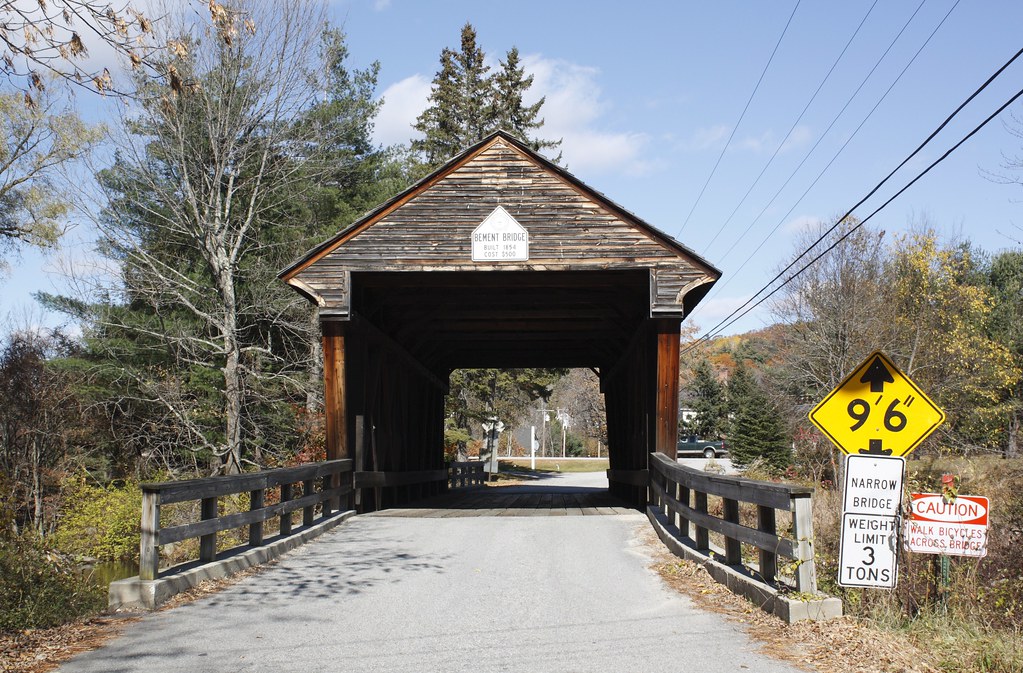
Bement Covered Bridge #14

source: New Hampshire Covered Bridges:

Location: One quarter mile north of the intersection of N.H. Routes 103 and 114 on the Bradford Center Road in Bradford. The bridge spans the west branch of the Warner River.

Style of Bridge: Long truss
Year of Construction: 1854
Original Cost: $500
Structural Characteristics: The bridge is 60'6" long with a clear span of 53'9". It has an overall width of 19'3" with a roadway width of 16'2", and a maximum vertical clearance of 13'2". It is posted for three tons.
Maintained By: Town of Bradford
World Guide Number: 29-07-03
New Hampshire Number: 14

Historical Remarks:
This is the third bridge at this location. Tradition has it that Colonel Stephen H. Long, a Hopkinton native and a member of the U.S. Army Topographical Engineers, built the bridge entirely of hemlock. No evidence was found however to support or dispute the claim. Much of Colonel Long's bridge building experience came from his employment with the Baltimore and Ohio Railroad. While working for the railroad, he developed a plan for a new covered bridge truss that became nationally known as the Long truss. Long patented his design in 1830. In 1835 and 1837 he patented improvements to the design. The town extensively rebuilt the bridge in 1947. The bridge was closed in March 1968 and repaired by the state in 1969 for $24,478.14. One-third of the cost was borne by the town. Vehicular damage to the bridge was repaired in 1987 by the state at a cost of $2,000. A cracked floor beam was repaired by the town during the winter of 1989-1990. The Bement Bridge is listed on the National Register of Historic Places.


diigo it

_/\_/\_

High Water


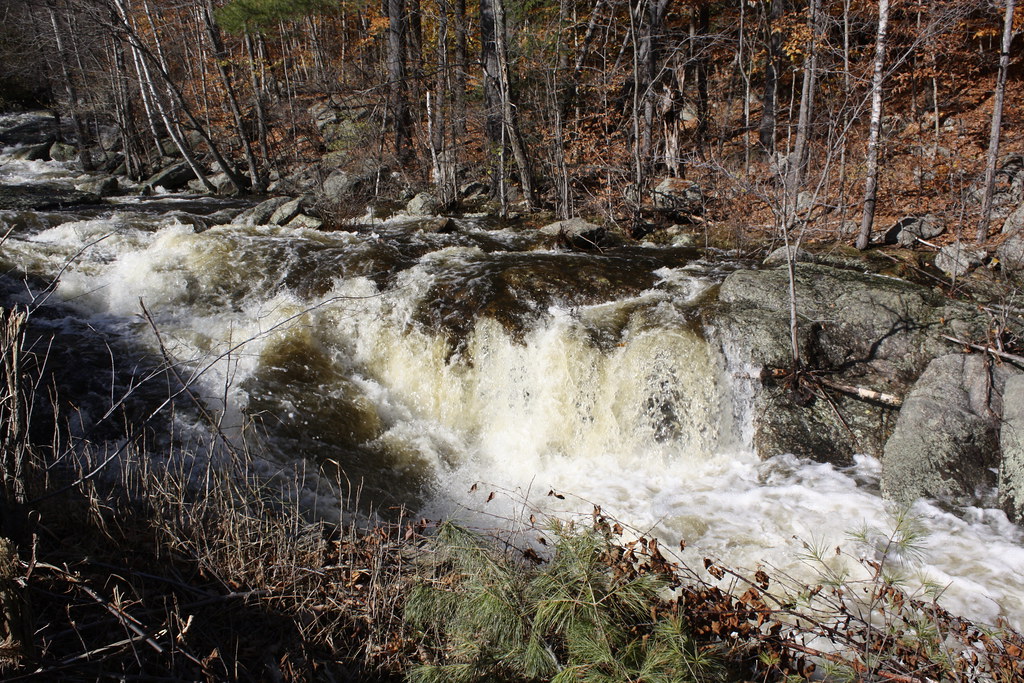
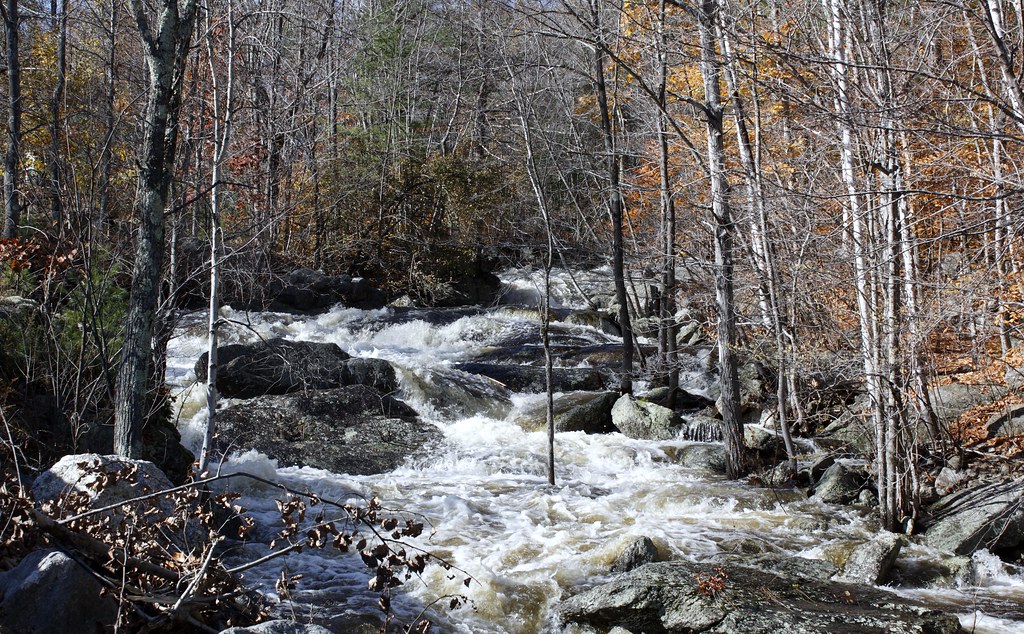
On October 25, 2009, the day after we had torrential rains, Kimpton Brook in Wilmot was wild with beauty and thunder. Here are two photographs that I took that day as we toured the area looking at the high water. I have been mis-naming Kimpton Brook. I thought it was Tipton Brook. Now I have to go back into Flickr and re-tag all of my photographs of this brook. That is quite a chore!


Just as the ministers in Barton, Vermont used water from the Barton River for baptisms, ministers here use Kimpton Brook water.

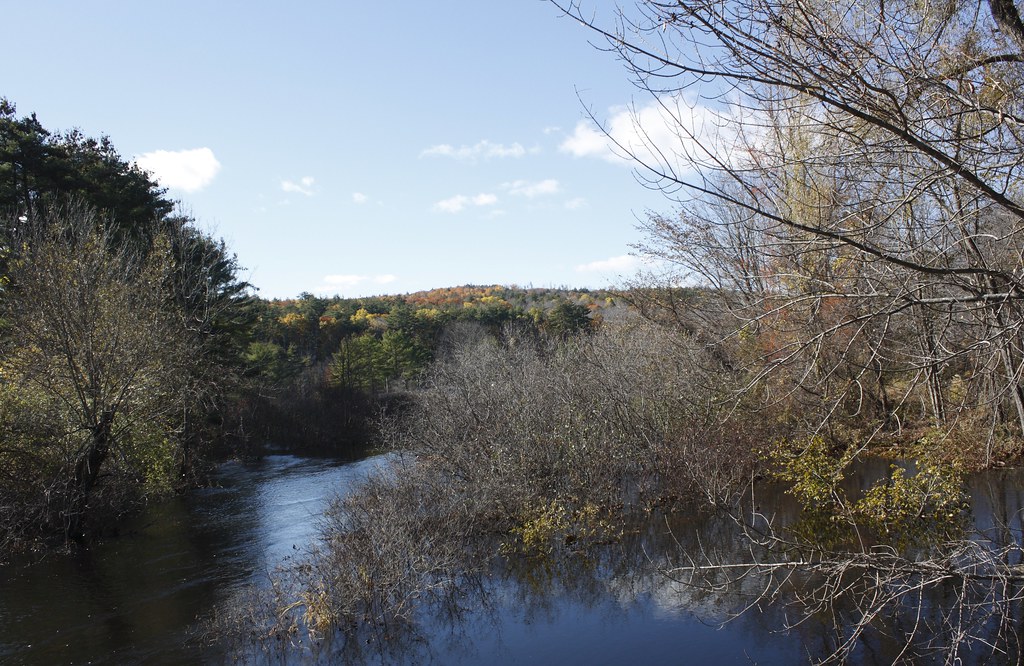
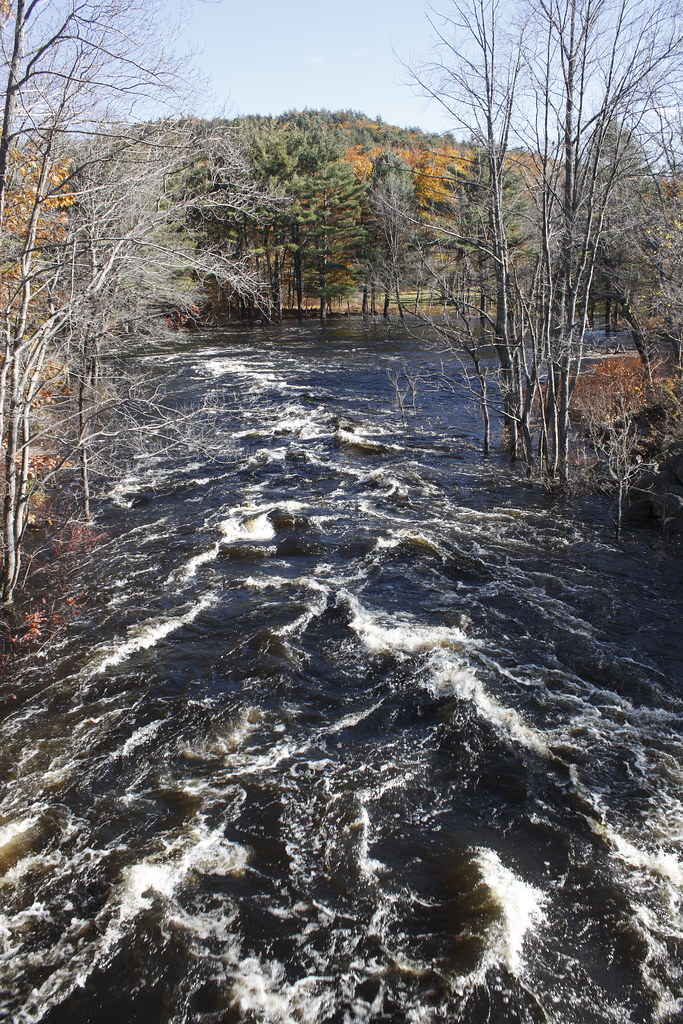
This is a photograph taken the same day of the Blackwater River as it flows through Wilmot.


diigo it

_/\_/\_

LinkWithin

Related Posts with Thumbnails